Eating Alone in Japan, Without Feeling Alone
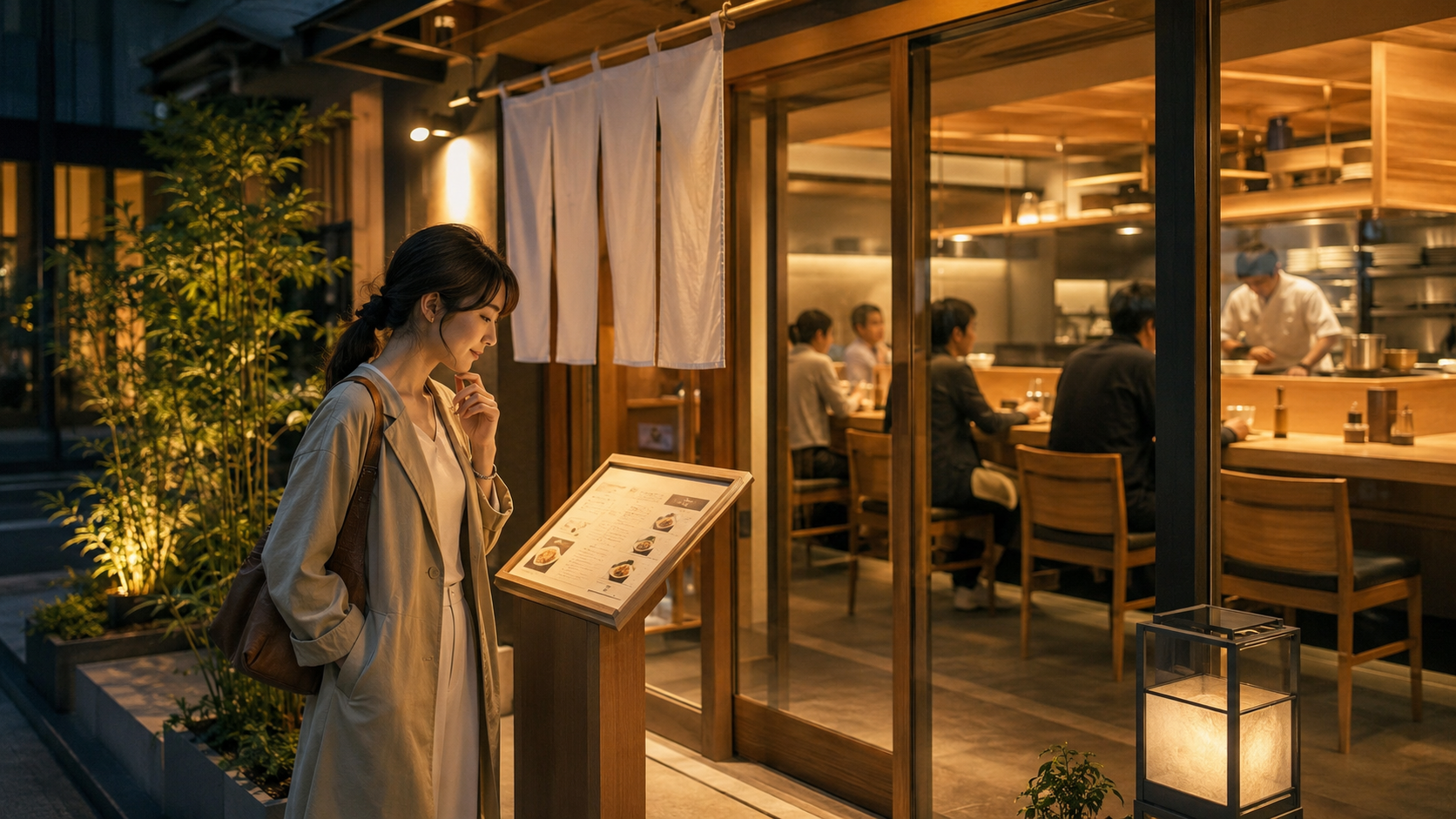
Have you ever stopped in front of a restaurant while traveling and thought, “Maybe I would feel awkward going in alone?”
In many countries, meals are often seen as something to share with other people. Sitting down at a table by yourself can sometimes feel a little uncomfortable.
But Japan is a different story.
Eating alone is neither unusual nor lonely. It is simply another way people enjoy everyday life. There is less pressure to worry about what others might think. Instead, there is room to appreciate the food, the atmosphere, and your own pace.
Even while traveling in Japan, solo dining may feel easier and more comfortable than you expect.
By the time you finish reading this column, some of that anxiety about eating alone may feel a little lighter.
Why It Feels So Natural
Solo dining is naturally built into everyday life in Japan.
Seeing people eating alone is very common. Stopping for lunch by yourself, or having dinner alone after work, is simply part of daily life. In Japan, one-person households are common, making up about 38 percent of private households in 2020, so eating by yourself is not treated as unusual. It is part of the rhythm of modern life.
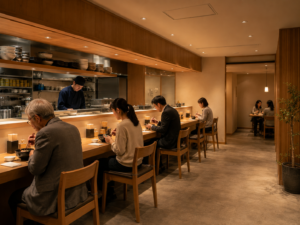
Many restaurants are also designed with solo customers in mind. Counter seating has long been part of Japanese food culture. At sushi and ramen restaurants, spaces are often arranged for individual diners. Some casual chains even make it easy to order quickly, sit alone, and leave without attracting any attention.
The style of service also plays a role. Staff are polite, but they usually respect your space. They do not speak more than necessary, and that quiet consideration allows you to enjoy your own time.
Carefully arranged dishes and clean, simple spaces add to that sense of comfort.
What I Felt at a Sushi Restaurant in Kanazawa
I felt this most strongly one evening while traveling alone in Kanazawa.
I walked through the noren curtain of a small sushi restaurant. The wooden counter had been carefully polished. Soft light filled the room.
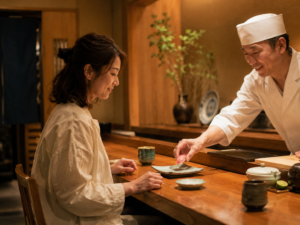
I could hear only small sounds — a knife touching the cutting board, a teacup being placed down.
The chef looked up and welcomed me with a warm smile. Being alone did not seem unusual at all.
One piece of sushi was placed in front of me at a time. Blackthroat seaperch, Spanish mackerel, sweet shrimp. Pale blue and deep green dishes quietly brought out their colors.
I expected to feel lonely. Instead, I felt strangely comfortable. I did not feel the need to talk to anyone. That was enough. For the first time, I realized that eating alone was not loneliness. It was freedom.
Before that experience, I had often traveled alone in Europe. Walking around cities was exciting, but dinner time sometimes felt difficult. I would stand outside restaurants, reading menus and hesitating.
Some nights, I bought bread and cheese at supermarkets and ate in my hotel room.
The sound of opening a plastic container. Laughter coming from outside the window. In a dimly lit room, it felt as though the excitement of traveling had been left behind somewhere else.
That is why the quiet sushi counter in Kanazawa stayed with me. Nothing dramatic happened. No one tried to entertain me. But I was given a seat, a meal, and the freedom to enjoy both in my own way.
Solo Dining Is Not Loneliness
If eating alone while traveling feels a little intimidating, Japan may change that feeling. You can start with simple places: ramen shops, casual restaurants, or sushi counters. All you need to say is, “Just one person, please.” You will simply be shown to a seat.
Then, little by little, you may start noticing the aroma of the food, the beauty of the dishes, and the quiet atmosphere around you.
Solo dining is not about loneliness. It is a chance to enjoy flavors and quiet spaces at your own pace.
In Japan, that single seat does not have to feel empty. It can become a small, peaceful place where you notice the country — and perhaps yourself — more quietly.
It may become one of the most memorable parts of your journey in Japan.

Studying in New Zealand taught me the joy of connecting with the world through English. I write to share small joys and quiet moments from everyday life in Japan. Retro cafes and peaceful gardens are where I often find inspiration.