

Listening to a Japanese Garden Through Suikinkutsu
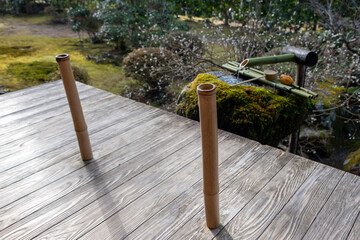
When we visit a beautiful garden, we tend to focus on what we can see. However, the charm of a Japanese garden is not limited to its scenery. If you listen carefully, you may discover another layer of beauty that cannot be seen with your eyes. One of the best examples of this is the suikinkutsu.
In this column, I would like to introduce the hidden charm of Japanese gardens through the unique sound of the suikinkutsu.
A suikinkutsu is a traditional feature found in some Japanese gardens. It consists of a buried earthenware jar that creates beautiful sounds when water droplets fall into it.
The sound is very soft and can only be heard if you listen carefully. As drops of water fall into the subterranean jar, they produce crisp, clear tones that are often compared to the ringing of a crystal bell or the gentle sound of a Japanese koto harp.
What makes the suikinkutsu even more fascinating is that, although its beautiful sound comes from beneath the ground, the mechanism itself remains hidden from view.
Japanese gardens invite visitors not only to look, but also to slow down and pay attention to subtle sounds around them. In such a setting, people naturally find themselves pausing to appreciate the scenery while listening quietly to the sounds of the garden. I, too, had an opportunity to experience this unique charm in Kyoto.
About twenty years ago, I visited Ohara, a rural area of Kyoto, with my mother and older sister. Since my mother felt that climbing the long stone steps of Sanzen-in Temple would be difficult, we decided to stop at the tea room of Hosen-in Temple nearby.
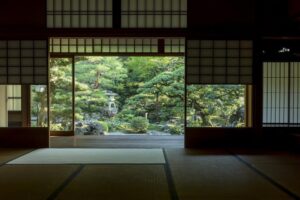
It was February, and patches of snow still remained on the ground. Sitting in the tatami room and looking out at the garden, it seemed like a painting frozen in time. As I enjoyed matcha green tea and a traditional Japanese sweet, I remember thinking how fortunate I was to be spending such a peaceful moment there.
Later, I stepped out onto the veranda and placed my ear near a bamboo tube that had been set out for listening to the suikinkutsu. From somewhere unseen came a clear, delicate sound. I found myself listening intently and wishing the moment would last a little longer.
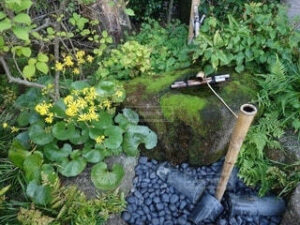
In the cold winter air, the sound seemed to blend naturally into the quiet garden. Although I could not see where it came from, its gentle resonance remained with me long after I had finished listening.
The suikinkutsu is a beautiful device created to allow people to enjoy Japanese gardens through sound. It reminds us that beauty is not always found in what we can see.
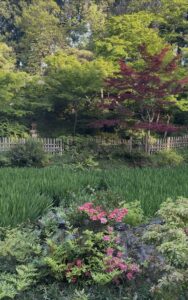
That sensibility continues to live on in the tranquil spaces of Japanese gardens today. If you ever have the opportunity to visit one, I encourage you to listen carefully for the sound of a suikinkutsu. You may discover a quiet beauty that cannot be seen, but can still be deeply felt.

Yoshiko Niino is a midwife dedicated to improving Sexual and Reproductive Health and Rights (SRHR) throughout her career. After gaining clinical experience as a midwife, she lived in the United States for about seven years, where she gained intercultural experience and polished her English by taking a Master’s degree in Biomedical Ethics in English. She then returned to Japan and has since gained experience in administrative positions in the Ministry of Health, Labor and Welfare, and at an international health economics institution, during which she took a Ph.D. in medicine, followed by professor’s positions at undergraduate and master`s levels in nursing and midwifery. She now seeks to leverage these life experiences as a column writer in Tokyo.