
What Doraemon Taught Me About Real Strength
In Japan, there is an anime called Doraemon that has been loved for over 50 years. Doraemon is a cat-like robot from the future. He helps a boy named Nobita, who struggles with both school and sports, by using many useful gadgets from his pocket. At first glance, this story may look like a boy solving problems with the help of gadgets. However, to me, it is a story about trying to become stronger for someone you care about. In this column, I would like to share what I learned from Doraemon.

Doraemon is often seen as a helpful character who saves Nobita with his gadgets. Many people may think of him as someone you can rely on when you are in trouble. However, in the story, not everything can be solved with these gadgets. There are many moments when those gadgets do not work. At those times, Nobita tries to stand up on his own. Doraemon does not always step in to help him. Sometimes, he simply watches. It is not because he has given up on Nobita, but because he wants him to grow and overcome problems by himself. If Doraemon helped every time, Nobita might lose the chance to think and act on his own. Because of this, Doraemon sometimes chooses not to help. In real life, people who truly care about us do not always solve our problems for us. Sometimes, they support us by believing that we can overcome difficulties on our own. To me, this relationship shows a quiet but strong feeling: trying to become stronger for someone important.
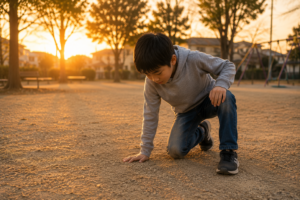
One episode that made me feel this strongly is “Goodbye, Doraemon.” When Doraemon has to return to the future, Nobita tries to prove that he can live on his own. He faces a bully without using any gadgets. He is knocked down many times, but he keeps standing up. He is not doing it for himself. He does it to make Doraemon feel at ease before leaving.
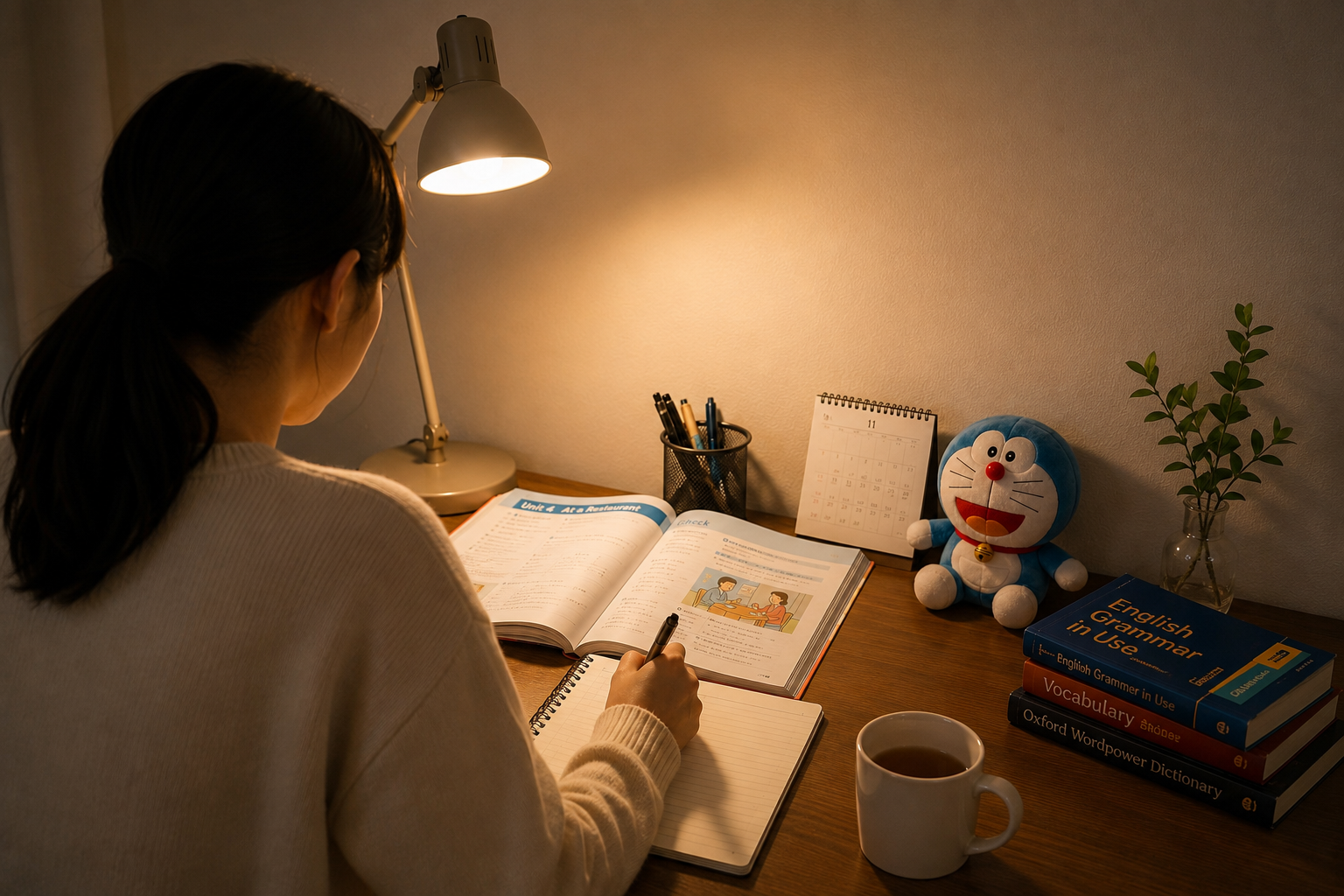
I first read this story when I was ten years old. I could not stop crying. The story felt painfully close to my own experience. At that time, I was going through a difficult time at school. I did not tell my family, because I did not want to worry them. I tried to handle everything on my own. Looking back now, I think I believed that “not showing weakness” was strength. However, through this story, I began to feel something different. Real strength is choosing to take one step forward, even when you are afraid, while thinking of someone you care about. That lesson has stayed with me ever since. One example is my decision to start learning English again. These days, I spend my time working full-time while also taking care of my home and child. I hardly have any time for myself. Even so, I decided to start studying English again. Sometimes, I study late at night after my daughter has gone to bed. There are days when I feel tired and want to give up.
My five-year-old daughter is a little shy, and she is sometimes afraid of making mistakes. When she says, “I can’t do it,” I encourage her to try again, even if the result is not perfect. At the same time, I realized that I should do the same myself. I want her to see that making mistakes is part of learning something new. This challenge is not only for me, but also for my daughter. I hope that when she sees me learning and making mistakes, she will feel more confident about trying new things. I believe that trying to become stronger for someone we care about can give them comfort and courage.
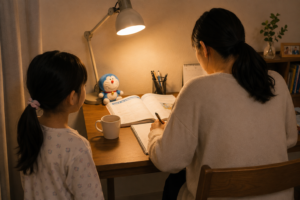
To me, Doraemon is not just a story about useful gadgets. It is a story that teaches us how to stand up on our own, while thinking of someone important. If you have never watched Doraemon, it may look like a children’s anime. But if you look a little deeper, you may find something more. You may begin to notice people taking a step forward for someone they care about. Perhaps you have had a similar experience. If you watch it with that feeling in mind, you may see it in a completely new way. It may remind you that some of the bravest steps we take are not only for ourselves, but also for the people who matter to us.

I explore the hidden and mysterious side of Japan. I write about ancient shrines, yokai folklore, traditional legends, and cultural stories that quietly live in everyday places. Through my columns, I invite readers to discover a side of Japan beyond guidebooks.