①-400x267.jpg)
Saying “Thank You” Before Letting Go; A Japanese Approach to Tidying with Care
In many countries, tidying up tends to focus on how much you can throw away or reduce.
In Japan, however, there is a different idea: when letting go of an object, people may say “thank you” to it.
At first glance, this may seem strange. Why would anyone feel the need to thank an object? This practice offers a glimpse into a uniquely Japanese way of seeing things.
In this column, I explore why people in Japan express gratitude when letting go of belongings, drawing on my own experiences. From this perspective, tidying up in Japan may come to feel less like a decision about keeping or discarding and more like an act of bringing emotional closure.
In Japan, objects are sometimes seen not merely as possessions, but as things that have shared time with us.
For a long time, there has been a cultural tendency to show respect not only to nature but also to everyday tools and belongings. It feels less like a religious act and more like an everyday habit shaped by a culture that values treating things with care.
Even when an object has served its purpose and feels no longer needed, people may pause to acknowledge the time and effort invested in it. Saying “thank you” can be understood as a Japanese way of marking an ending—a quiet way of bringing something to a close.
Even with this way of thinking, letting go of things is not always easy.
My mother owned many belongings throughout her life. Having lived through the war and its aftermath, possessions represented proof that she had overcome poverty—they were a symbol of abundance. She was not good at organizing, and even having her belongings moved caused her deep anxiety.
After she passed away, I found myself surrounded by her clothes. Many of the garments she cherished remained untouched, and the finest ones had been damaged by insects. I realized that time had simply passed without her ever having the chance to truly face the act of letting them go.

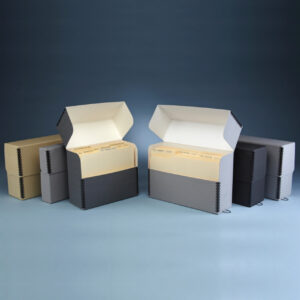
Years later, I noticed the same thing happening to me. As I stood in front of boxes filled with documents from my years in the United States, my hands froze. Each box brought back memories, and I found myself unable to decide whether to keep or discard anything.
Looking back, I think neither my mother nor I struggled because we could not part with the objects themselves. We struggled because we did not know how to bring our shared time with those objects to an end.
That is why I want to try using this Japanese idea—ending with gratitude—for myself from now on.
If you know you need to tidy up but find yourself unable to let go, you might try the Japanese practice of saying “thank you” before doing so.
Pick up the object and say a simple “thank you.”
This is not about forcing yourself to throw it away, but about taking a brief pause to acknowledge what the object meant to you, so that you can decide, calmly and on your own terms, whether to let it go or keep it.

Yoshiko Niino is a midwife dedicated to improving Sexual and Reproductive Health and Rights (SRHR) throughout her career. After gaining clinical experience as a midwife, she lived in the United States for about seven years, where she gained intercultural experience and polished her English by taking a Master’s degree in Biomedical Ethics in English. She then returned to Japan and has since gained experience in administrative positions at a Health Economics Institution, and in nursing and midwifery education. She now seeks to leverage these life experiences as a column writer in Tokyo.

Yoshiko Niino is a midwife dedicated to improving Sexual and Reproductive Health and Rights (SRHR) throughout her career. After gaining clinical experience as a midwife, she lived in the United States for about seven years, where she gained intercultural experience and polished her English by taking a Master’s degree in Biomedical Ethics in English. She then returned to Japan and has since gained experience in administrative positions in the Ministry of Health, Labor and Welfare, and at an international health economics institution, during which she took a Ph.D. in medicine, followed by professor’s positions at undergraduate and master`s levels in nursing and midwifery. She now seeks to leverage these life experiences as a column writer in Tokyo.
①-800x533.jpg)