①-400x267.jpg)

More Than a Baby Journal: Japan’s Handbook That Helped My Daughter
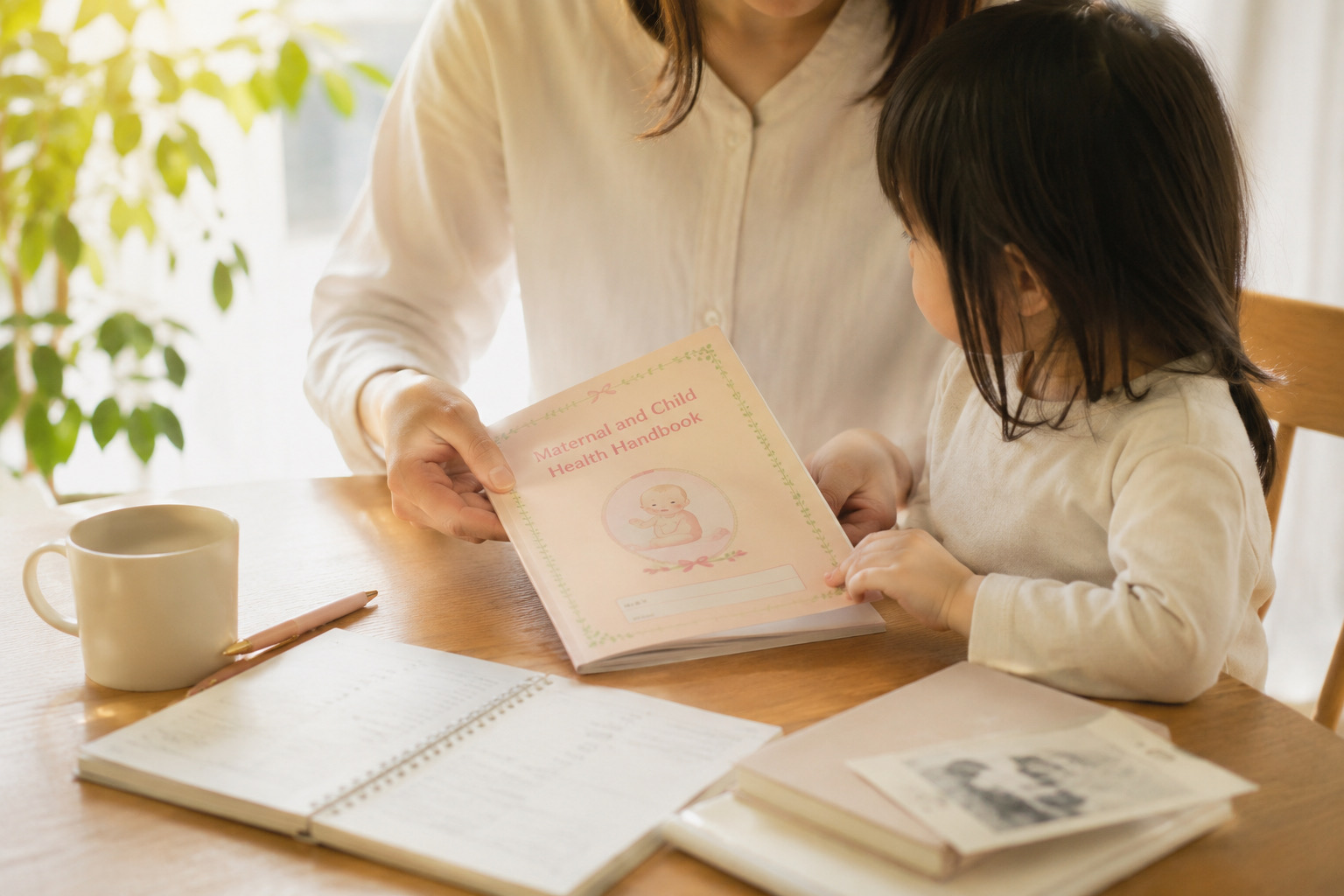
In Japan, when parents learn they are expecting a baby, they receive the “Maternal and Child Health Handbook” (Boshi Techo) from their local government. This handbook is used to record a child’s growth and health from pregnancy through early childhood. At first glance, it might look like a simple baby journal, but it actually serves as a portable medical record that parents keep with them for years. In this column, I’d like to share my experience and show how this simple handbook can make a real difference in a child’s health.

In the Maternal and Child Health Handbook, doctors and public health nurses add records during health checkups and vaccinations, while parents also write down what they notice at home. In this way, a child’s growth and health history gradually builds up in a single handbook.
As parents, we spend every day paying close attention to our children’s health and development. However, as time passes, it can become difficult to clearly remember small changes or events from years earlier. Especially at hospitals, many of us worry about whether we can explain everything clearly during a short consultation with a doctor. This is where the handbook becomes a reliable partner. Having everything in one place makes it easier to explain a child’s medical history, even at a new hospital. It also helps doctors understand how a child’s past and present conditions may be connected, which can sometimes lead them to notice small warning signs that might otherwise be overlooked.
I came to truly understand the importance of this handbook through my own experience.
Last autumn, I visited a university hospital because of my daughter’s chronic illness.
While answering the doctor’s questions, I casually mentioned, “Once she starts bleeding, it often takes a while for it to stop.” At the time, I did not think this was anything unusual. I’m the same way myself, so I simply believed it was normal.
After hearing this, the doctor picked up the handbook I had brought with me. He looked back through the pages—not just at my daughter’s records, but even at the notes about the bleeding during my delivery. After a while, he quietly said, “Your daughter might have another condition separate from the one we are currently treating.” The moment I heard those words, the sounds around me faded away, and I felt as if the world had gone dark. When I stepped out of the consultation room, I could still hear children crying and laughing in the hallway. It was the same ordinary scene as before, yet the doctor’s words still didn’t feel real.
After several tests, we learned that my daughter has an inherited blood disorder. For a while after hearing the diagnosis, I kept blaming myself, thinking, “She had symptoms all along. Why didn’t I notice sooner?” But now, a specialist regularly monitors her condition, and little by little, we have been able to live with greater peace of mind.
Looking back, the fact that the doctor reviewed those old records that day is what has helped us live more calmly today.
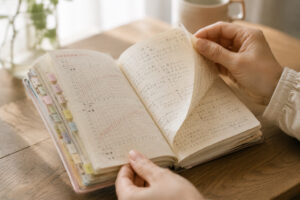
Japan’s Maternal and Child Health Handbook is a system that keeps a child’s growth and health records together in one place over the years. Because the handbook stays with the family, the records can continue to build up over time without being interrupted by changes in place or stage of life.
Sometimes, the meaning of certain moments in a child’s growth may not become clear until much later. That is why I believe keeping a “portable medical record” for your child may one day make a difference in ways you never expected.