The Magic of Kumi-daiko: How It Draws the Audience into the Rhythm

Photo: Ohno. A / Source: Wikimedia Commons / License: CC BY-SA 4.0
Some of the most memorable experiences in Japan are the ones a guidebook cannot fully describe. You have to be there to hear the sound, feel the energy, and share the moment with the people around you.
Kumi-daiko is one of those experiences. Several drummers play taiko of different sizes together, each with a role in shaping the performance. The sound is powerful, but the movement is just as striking. Drumsticks rise high, and the whole stage seems to move with the beat.
So why does kumi-daiko draw the audience so deeply into its rhythm? In this column, I would like to share what makes this live performance so captivating.
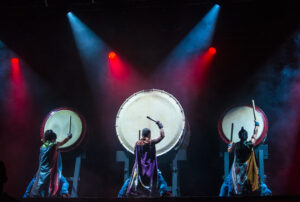
A kumi-daiko performance can feel almost like a conversation between the drummers. One drummer strikes, and another answers. Soon another drummer joins in, and the rhythm moves across the stage. Then, suddenly, all the drummers strike together.
Kumi-daiko is also something you watch, not just something you hear. The drummers raise their sticks high before each strike, and their whole bodies move with the rhythm.
As you watch, you begin to anticipate the next beat. Soon, you are waiting for it. Before you realize it, you are following the same rhythmic flow as the performers. You are no longer simply watching the rhythm. You are caught up in it.
Interestingly, research suggests something similar. When performers move in sync, audiences may feel more engaged with the performance. This sense of visual unity may be one reason kumi-daiko can draw people in so deeply.
The first time I saw kumi-daiko, I was completely drawn in.
It was about 15 years ago at the entrance ceremony of the university where I worked. A group of students was performing to welcome the new students.
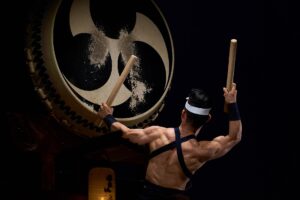
Photo: Ohno.A / Wikimedia Commons / CC BY-SA 4.0
I could feel each powerful drumbeat deep in my chest and abdomen. At times, it felt as if my whole body were being shaken.
The students raised their drumsticks high. One drummer struck, and another answered. Then another joined in. The rhythm kept changing. At certain moments, all the drummers struck together.
I began waiting for the next beat. Before I realized it, I was following the rhythm myself.
As I watched the individual performers become one through sound and movement, I stopped feeling like someone simply watching from the audience. I felt as if I had somehow entered the performance.
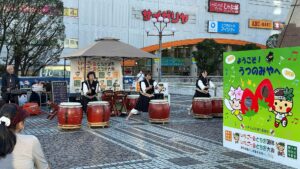
Photo: Asanagi / Wikimedia Commons / CC0 1.0
What makes kumi-daiko so powerful is not just the sound. It is the way the rhythm seems to reach beyond the stage and pull the audience into the performance.
That feeling is difficult to capture on a screen. If you visit Japan, I hope you will have the chance to experience kumi-daiko live—and discover for yourself what it feels like to be drawn into the rhythm.

Yoshiko Niino is a midwife dedicated to improving Sexual and Reproductive Health and Rights (SRHR) throughout her career. After gaining clinical experience as a midwife, she lived in the United States for about seven years, where she gained intercultural experience and polished her English by taking a Master’s degree in Biomedical Ethics in English. She then returned to Japan and has since gained experience in administrative positions in the Ministry of Health, Labor and Welfare, and at an international health economics institution, during which she took a Ph.D. in medicine, followed by professor’s positions at undergraduate and master`s levels in nursing and midwifery. She now seeks to leverage these life experiences as a column writer in Tokyo.