
The Quiet Rhythm of Kanmangafuchi
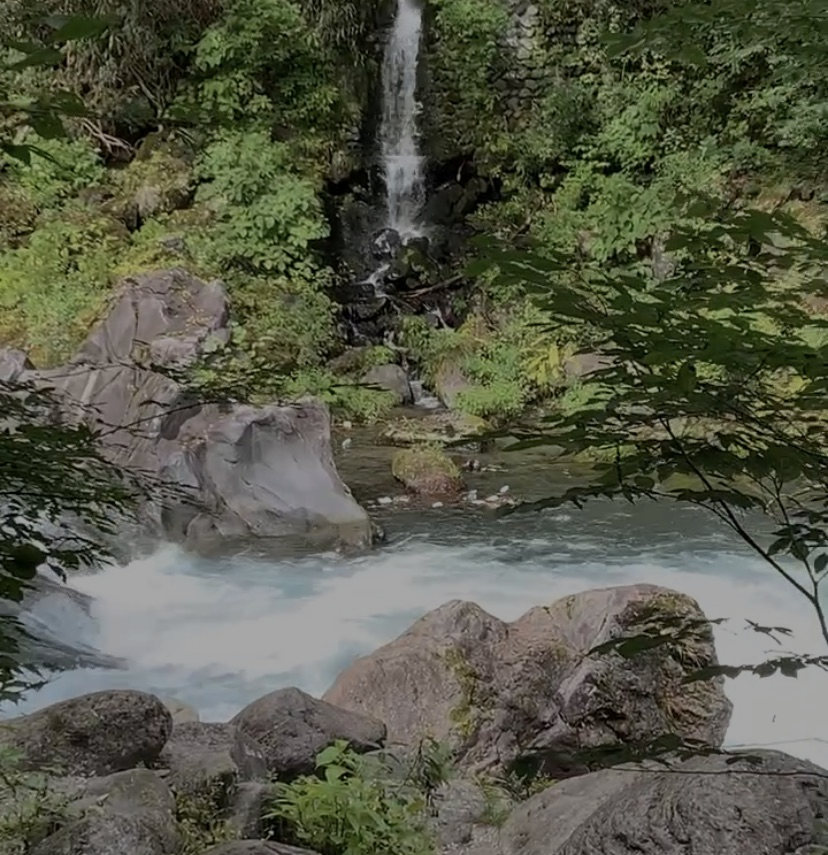
In the center of Nikko, near the World Heritage site of Toshogu Shrine, there is a path that follows the river for about twenty minutes on foot. As the lines of visitors gradually thin out and the signs of the city fade behind you, the air begins to cool almost without notice.
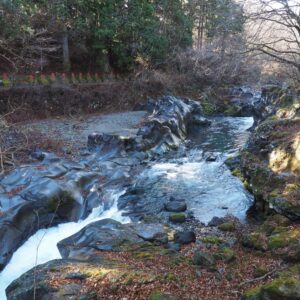
At the boundary where mountains meet the town, a narrow walking path runs along a small gorge. This is Kanmangafuchi.
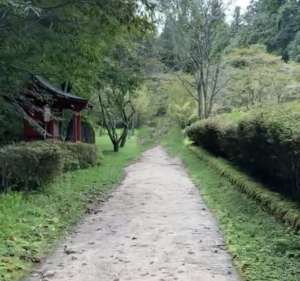
A slim trail follows the flow of the river, with the sound of water staying close to your feet at every step. It does not feel like a road leading to a destination, but rather a path that just goes on.
In this column, I trace how a twenty-minute walk between sightseeing stops quietly changes the way we experience time while traveling.
Kanmangafuchi is a short walking trail, taking around twenty to thirty minutes one way. There are no decorative buildings, no landmark attractions, and only minimal signs. No one tells you where to stop, or what to look at first. How long your stride should be. Where you choose to pause. On this path, even the way you walk is left up to you.
That may be why attention shifts away from holding up a camera and toward the sensation beneath your feet, or the steady sound of the river.
This place has also been preserved without large-scale development, maintained instead through small, quiet human actions. Rather than adding something new, people chose to leave what was already there. Those choices, repeated over time, are what have allowed this stillness to remain.
Along the riverside path, small red figures appear at regular intervals, all at the same height. They blend into the landscape—unobtrusive, yet undeniably present.
Seen up close, they are small Jizo statues. Each one wears a slightly different red cap or bib. New cloth and faded fabric sit naturally side by side. I tried to count them, but lost track halfway through and quietly gave up.
Underfoot, moss-covered stones and thick tree roots stretch across the path, catching lightly against the soles of my shoes with each step. As the trail curves along the river, the view shifts little by little, and the movement of the body seems to merge with the surrounding scenery.
When I stop without thinking, one of the red-capped figures appears to be looking back at me, and I find myself smiling. The river continues its steady sound, unchanged, while only my footsteps layer softly on top of it. Before I notice, both my walking pace and my breathing are drawn into the rhythm of the gorge.
The appeal of Kanmangafuchi lies not in a single attraction, but in how the walk itself unfolds. It lies in having no instructions, and walking at your own pace—allowing the experience of travel to shift, little by little.
As you move along the narrow path, your gaze turns to small details, and your awareness opens to sound and air. What once felt like simple movement slowly becomes something you experience with all your senses.
If you visit Nikko, take this path between visits to its more ornate shrines and temples. A stretch of road with no commentary to guide you, walked at your own rhythm.
Within an unchanging landscape, there is a quiet moment when the journey becomes truly your own—and it is waiting there.
Image credit: Nikko Botanical Garden (Jizo statues across the river)

Studying in New Zealand taught me the joy of connecting with the world through English. I write to share small joys and quiet moments from everyday life in Japan. Retro cafes and peaceful gardens are where I often find inspiration.