When Sake Lets the Food Shine
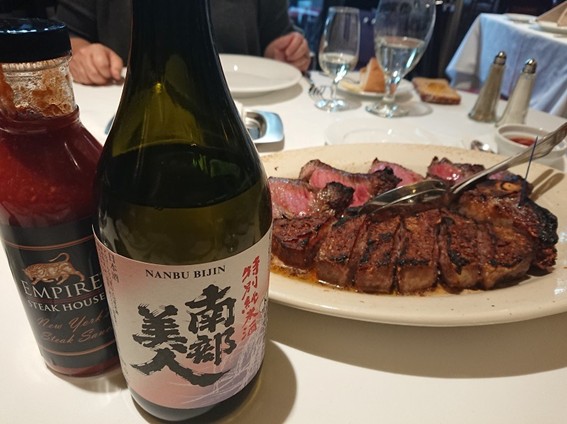
Japanese sake is widely known overseas. However, for many, the image remains limited to small cups served at sushi restaurants. Some perceive it as a harsh alcohol to be downed quickly, often consumed like a “shot.” As a result, many people think sake only belongs with sushi and doesn’t pair with other cuisines.
In Japan, however, sake is savored slowly alongside a meal. It is enjoyed by carefully selecting its temperature and glassware, always considering the harmony with the food.
Sake is not just for Japanese food. It pairs beautifully with meat dishes, seafood, and even cheese or Western cuisine. If wine is a partner that stands alongside a dish to create a shared flavor, sake is the presence that makes the food itself shine. This distinction reflects how Japanese cuisine prioritizes balance over boldness. In this column, I would like to share why sake is such a versatile companion for any meal.
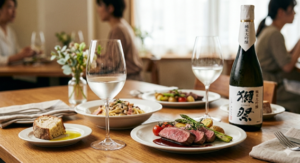
In the world of wine, deciding “which bottle to pair” is a central joy of dining. With its tannins, acidity, and aged aromas, wine asserts its presence side-by-side with the food. The concept of pairing a bold red with fatty dishes is a well-known and charming culture; wine walks hand-in-hand with the dish. Sake, however, takes a different approach. Rather than using acidity or astringency to “cut” through fat, sake softens and integrates the flavors. Because sake is rich in umami, it layers upon the umami of meat or fish, allowing the overall taste to expand naturally. Rather than changing the flavor of the dish, sake deepens what is already there.
In Japanese culinary culture, great importance is placed on enhancing the main ingredient. Ingredients are respected, tableware is chosen to highlight the food, and the atmosphere is designed not to distract. Sake follows this philosophy: it does not seek the spotlight but supports the flavor of the dish from behind the scenes.
One day, I had the opportunity to dine with some business partners from overseas. Naturally, they reached for the wine list and were about to order a bottle of red.
That’s when I suggested sake. Though they looked a bit surprised, they agreed to give it a try. First, I poured a chilled premium Junmai Daiginjo sake into wine glasses. I chose wine glasses over traditional small cups intentionally—to let them truly experience the aroma. As they swirled the glasses and took a breath of the scent, they fell silent for a moment. Then, with a smile, they remarked, “It’s so fruity,” and “It’s almost like a white wine.” In that instant, the atmosphere at the table noticeably softened.
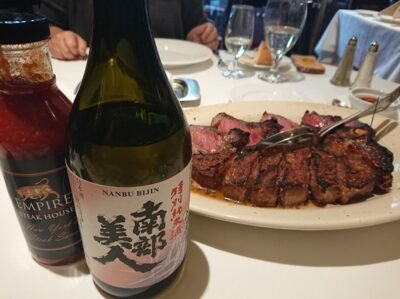
For the main course, a Wagyu steak, I paired a Junmai sake, made purely from rice, warmed to about 40 degrees Celsius (104°F). They looked puzzled at the idea of “warm alcohol,” but after the first sip, their expressions transformed. “It makes the fat of the meat feel so mellow,” one noted. “The flavor becomes well-rounded.” They explained that unlike red wine, which cuts through the fat, the sake seemed to enhance the savory depth of the meat.
At that moment, I truly realized the role of sake once again. Sake is not meant to compete with the food, but to bring the dish to the forefront and support it from behind.
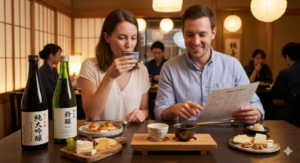
Sake is not just for sushi. It enhances the flavors of a meal regardless of the cuisine. Unlike wine, which walks side-by-side with a dish, sake supports the food from one step behind. This modest, supporting role is precisely where the charm of sake lies.
The next time you enjoy steak, seafood, or even cheese, try choosing sake instead of wine. By experiencing firsthand how the flavors of the dish evolve, you may encounter a whole new world of culinary discovery. Sake perfectly embodies the Japanese dining philosophy: letting the food take center stage.