The Randoseru: Japan’s Unique School Tradition
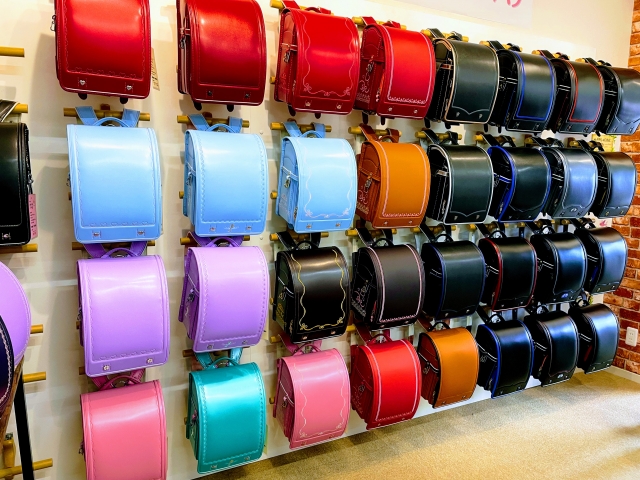
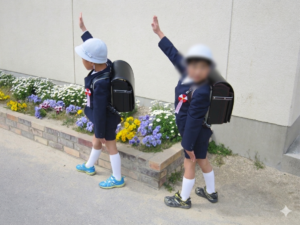
In many Western countries, children usually choose any backpack they like when they start school. In contrast, almost all elementary school students in Japan use the same type of bag called a randoseru. The randoseru is a symbol of entering elementary school in Japan. In spring, you can see new first graders proudly carrying their brand-new randoseru on their backs. This column explores why the randoseru means much more than just a school bag in Japan.
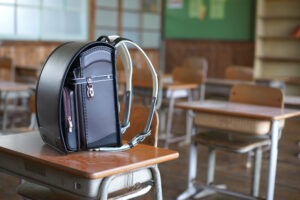
The randoseru is designed to last, as children use it every day for six years. Its sturdy box shape protects textbooks, and it sits comfortably on a child’s back. Made from water-resistant materials, it is also light and easy to carry.
In Japan, using the same items at school has long been considered a way to help children feel secure. When everyone carries the same bag, it helps create a sense of equality. In the past, boys usually had black randoseru and girls had red. This custom reflected the idea that uniformity could promote fairness among students. The randoseru is often given as a gift to celebrate a child’s first year of elementary school. Families choose it with the hope that their child will grow safely and happily over the next six years. For many families, the randoseru therefore carries deep emotional meaning.
Today, there is a wide variety of colors and designs available. When my child and I went to choose one, we were surprised by how many options there were. Some were decorated with embroidery, and others were inspired by sports brands. We took our time choosing, since it would be used daily for six years. As I watched my child carefully choose the perfect bag, I realized how much they were growing up. When the randoseru finally arrived, they stood proudly with it on their back, even though it looked big on their small frame.
The randoseru stays with a child for all six years of elementary school. By graduation, it may have many scratches, but each one reflects the time the child has spent learning and growing.
If you visit Japan in spring, look at the children walking with their square bags. Inside those square bags, you can find the love and hopes of their families.