
More Than a Toy: Origami Passed Down Across Generations
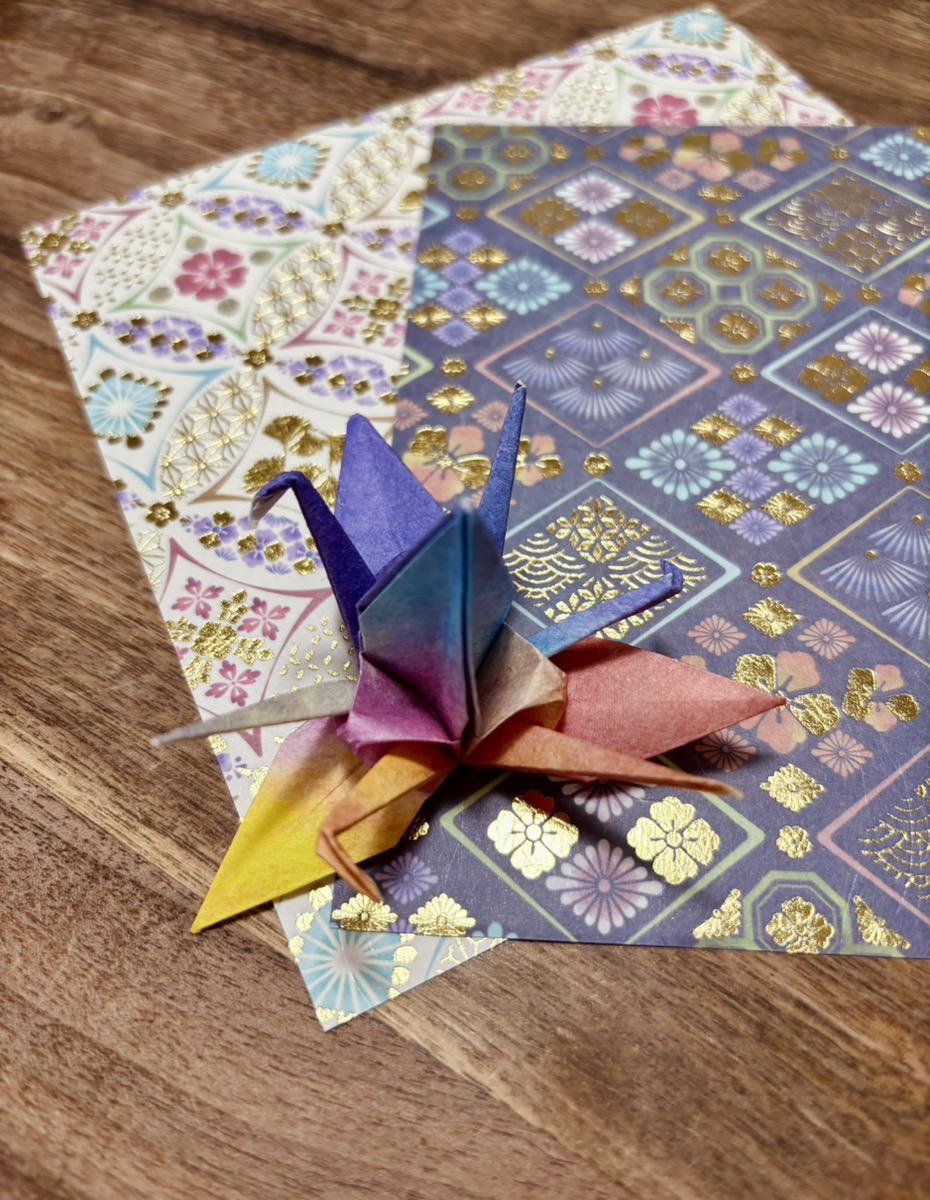
What comes to mind when you think of Japanese origami? While it is a traditional pastime, it is not just a toy for children. For me, a small square of paper has connected my childhood memories to who I am today. In this column, I would like to share how origami is part of our daily lives in Japan, through my own stories.
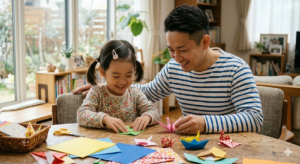
In Japan, many children grow up playing with origami. Origami paper is easy and affordable to find in stationery sections and 100-yen stores. Origami is also great for keeping children entertained at home and while on the go. Beyond the home, origami is also used in kindergartens and schools as a material for arts and crafts. At school events, many children join together to fold “Senbazuru” (a thousand paper cranes) which is a symbol of peace, to pray for a better world. This experience is also a chance to learn about world peace. But I realized that the world of origami is so much more than this. Sometimes it becomes a work of art, at other times, we fold our wishes into paper cranes during life’s milestones. It can enrich our daily lives, even as adults.
My father is dexterous with his hands, so I often folded paper with him in my childhood. I heard from my father that people loved origami cranes when he gave them during his overseas business trips. That is when I realized that it was a rare item overseas, unlike in Japan. One day, my father found a picture of two connected cranes in the newspaper. I became curious about it. Then, my father took me to an origami museum, and I saw “Renzuru” in person. I was surprised by its delicate beauty. I tried my hand at folding a Renzuru of eight connected cranes while looking at the book that my father bought me. Even after more than 20 years, my parents still cherish and display it in their home. It was this experience that sparked my fascination with origami.
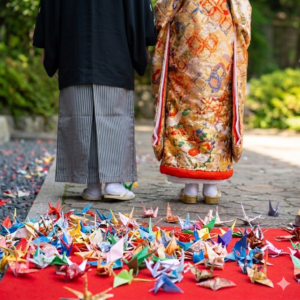
Time passed, and when I grew up, I had an origami crane shower at my own wedding. Origami cranes are a symbol of longevity and happiness in Japan. I folded each crane with gratitude for my guests and wished for their happiness. Then when I visited the Nordic countries, I left a crane in the hotel room as a small gesture of gratitude just as my father used to do. I hope it made the staff smile.
Japanese origami is like a baton that is passed down from parents to children across generations. This is why I hope to cherish and hand down this tradition. Does your country have something that is passed down from parents to children, or from person to person?
Maki Kawachi
I am a mother of two who moved to Belgium in 2026 because of my husband’s job relocation. As a high school student, I was a member of the wind ensemble and marching band color guard, where I had the chance to perform in the U.S. and experience the universal power of music and dance. Inspired by this experience, I started learning jazz dance and contemporary pair dance in earnest. I also have a side as a dancer. I learned kimono dressing in 25years old. Wearing a kimono is my hobby. As I’m moving to Belgium, I’m also studying French. Through my experiences living in Japan and Belgium, I would like to share my perspective and experiences in a column.